Global Orders and Foreign Policies

Global Orders and Foreign Policies

The Global Orders and Foreign Policies Research Programme studies the development and maintenance of regional and global orders in contemporary world politics – along with challenges to those orders – as well as examining the agency and policies of established and emergent actors and structures that contribute to these ordering processes.


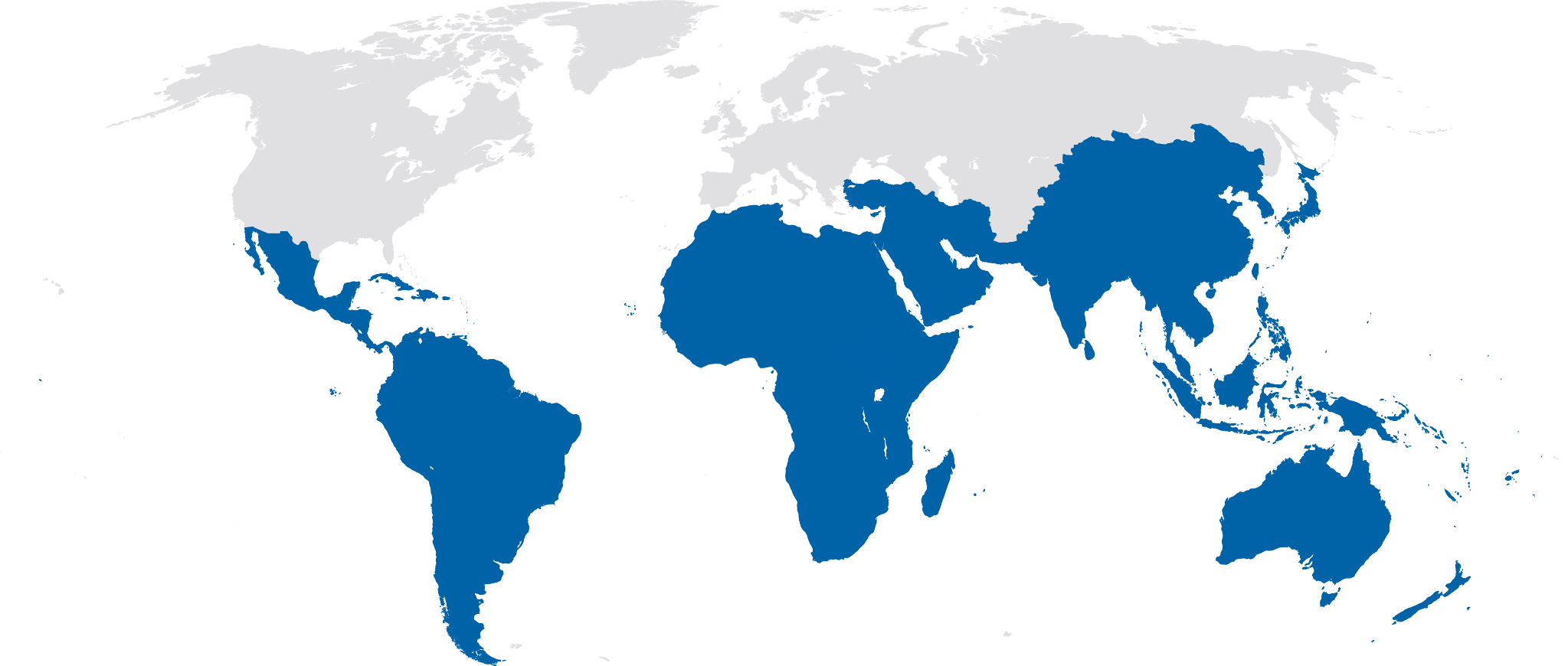
  • The Global Orders and Foreign Policies Research Programme attempts to better understand and explain the complexity of global politics, with a focus on state and non-state actors in the Global South, as well as on the international institutions with which they cooperate (or not). Our researchers analyse trends related to climate change, global health crises, populism, and the increasing polarisation in geopolitics and geoeconomics. One particular focus is the growing importance of South–South relations and its impact on global orders.

    Our research is mostly linked to the disciplines of Political Science and International Relations, but our teams shares close ties with economists, geographers, and peace and conflict researchers. While qualitative methods currently prevail in our work, quantitative and mixed-methods approaches are also part of our toolkits. We work with a multiplicity of partners within and outside of the Global South and have developed strong networks with academics, policymakers, and think tanks. The Research Programme’s work in the regions on which we focus is highly engaged with policymaking but also contributes to integrative and co-created theoretisation of international affairs, governance, multilateralism, and the making of foreign policy, especially from the perspective of the Global South.

    GIGA Focus Global | 2/2026

    China’s Global Security Initiative and Its Reception in the Global South

    China’s Global Security Initiative projects its stability-focused security model abroad. How do East Africa, Southeast Asia, and the Middle East perceive the GSI? What does this mean for the future of the international security order? And how should Germany and the EU best respond?

    Poster + Video "Machtkampf im Pazifik: Ein Südseeparadies im Visier der Supermächte", ARTE
    Poster + Video "Machtkampf im Pazifik: Ein Südseeparadies im Visier der Supermächte", ARTE

    GIGA Focus Global | 2/2026

    China’s Global Security Initiative and Its Reception in the Global South

    China’s Global Security Initiative projects its stability-focused security model abroad. How do East Africa, Southeast Asia, and the Middle East perceive the GSI? What does this mean for the future of the international security order? And how should Germany and the EU best respond?

    Social Inclusion | 02/2026

    “My Phone Is like My Office”: Refugee Women’s Social Media Entrepreneurship in Dar-Es-Salaam

    This article explores social media entrepreneurship among Congolese refugee women in Dar es Salaam. It shows how virtual mobility and connectivity help offset immobilization under Tanzania’s asylum regime, while also underscoring the risk of reinforcing intersectional discrimination based on gender and legal status.

    Catherina Wilson

    Leiden University

    GIGA Insights | 01/2026

    What Directions Might China–Venezuela Relations Take after Maduro’s Downfall?

    China and Venezuela’s long-standing alliance faces its toughest test yet after Maduro’s arrest. From oil-for-loans deals to digital surveillance and military cooperation, Beijing now risks losing influence as Washington moves to assert dominance over Caracas.

    Research Project | 01/01/2026 - 31/12/2032

    Co-Creating Narrative-Based Near-Term Climate Predictions to Prepare for Volatile Future Climates (part of Excellence Cluster CLICCS / Phase II)

    The Cluster of Excellence “Climate, Climatic Change, and Society” (CLICCS), based at Universität Hamburg, is guided by the overarching question: "Which climate futures are possible and which are plausible?" This GIGA co-led project in the cluster's second phase aims to enhance the use of near-term climate predictions through the use of narratives, where effective narratives are not only founded in climate dynamics, but - through an iterative process - co-created with societal actors.
    DFG, Excellence Strategy, 2026-2032

    Research Project | 01/01/2026 - 30/06/2026

    European Approaches to the Indo-Pacific

    Italy is one of the few major European countries without a formal Indo-Pacific strategy. This policy-oriented project led by the Torino World Affairs Institute aims at assisting the Italian government in deciding on whether to adopt such a strategy and to identify lessons that can be learned from France and Germany's Indo-Pacific engagements.
    Ministry of Foreign Affairs, Italy, 2026

    Research Project | 01/11/2025 - 31/10/2028

    Leibniz Research Network "China"

    The Leibniz Research Network "China" consolidates existing China expertise within the Leibniz Association and makes it politically utilisable. In addition, experience-sharing between members supports them in conducting cooperation with Chinese partners while maintaining research security. The GIGA contributes to the network, inter alia, with its expertise on China’s foreign policy.
    Leibniz Association, 2025-2028

    Research Project | 01/01/2025 - 31/12/2027

    Intellectual Contestation over China’s Multiethnic Regime

    This project will critically examine the societal discourse surrounding ethnic politics in mainland China, focusing on how intellectuals utilized various philosophical, theoretical, and cultural resources while adapting, appropriating, and rearticulating ideas to engage with the subject. It will shed light on the critical-mindedness and agency of contemporary Chinese intellectuals and enhance our understanding of intellectual praxis and knowledge production in a non-Western context.
    DFG, 2025-2027

    Research Project | 01/10/2024 - 30/09/2027

    World Order Narratives of the Global South, Phase II

    In its second funding phase, the WONAGO project continues to investigate powerful world order narratives in Latin America, Africa, the Middle East and Asia. It particularly aims to understand those perceptions in these regions that - as currently in the Ukraine war - differ significantly from prevailing ideas in the U.S., the EU, and their allies.
    BMFTR, 2024-2027

    Research Project | 01/04/2024 - 31/03/2027

    Leibniz Lab Systemic Sustainability

    The rapid loss of biodiversity and ongoing climate change are also the result of intensive agriculture. At the same time, they jeopardize agriculture and food security. The Leibniz Lab "Systemic Sustainability" brings together relevant knowledge in science and society on this fundamental challenge in order to promote the development and implementation of systemic solutions.
    Leibniz Association, 2024-2027

    Dr. Anette Ruml

    Former GIGA Team member

    Research Project | 01/02/2024 - 31/12/2026

    Digital Transformation Lab (DigiTraL), Phase II: Digitalisation as Chance for Cooperation with Global Partners

    GIGA‘s Digital Transformation Lab (DigiTraL), funded by the German Federal Foreign Office, analyses the political drivers and real-world consequences of the digital transformation taking place around the world. The Global South in particular is an important actor in and shaper of this transformation.
    FFO, 2024-2026

    Research Project | 01/01/2024 - 31/12/2025

    Climate Obstruction and Foreign Policy in Comparative Perspective

    The fight against climate change continues to be hindered by campaigns of corporate and other actors who seek to prevent global and/or national action on climate change. This research group is set up to a joint and comparative research agenda on climate obstruction in and across key Global South countries. The lead institutions are the GIGA and the Universidade do Estado do Rio de Janeiro (UERJ).
    DAAD/CAPES, 2024-2026

    Team


    Associated


    Working Groups


    Working Group 1: International Institutions and Legitimacy

    The Working Group examines the politics of international institutional development. We analyse how the rise of powers from the Global South, transnational activist groups, and other influential non-state actors shapes the formation of regionally varying sets of institutions and principles and how these regional transformations contribute to the growing complexity of the global multilateral order. This increasingly polycentric order provides, on the one hand, increased opportunities for interaction and more flexibility in terms of partner choice at the regional and international levels. On the other hand, the multiplication and overlapping of institutions engendered by the new order have caused fragmentation and disorder that call into question the normative foundations and empirical legitimacy of the multilateral order and its elemental institutions.

    Spokesperson

    N.N.


    Working Group 2: Ideas, Actors and Global Politics

    The Working Group explores the variety of domestic and transnational actors involved in global and regional politics, their respective foreign policy interests, negotiation strategies, and worldviews. Globalisation processes of the past decades have contributed to the internationalisation of domestic actors – from businesses to political parties or civil society groups. Meanwhile, a number of states in the Global South, from rising powers such as China and India to regional or middle powers such as Turkey and Saudi Arabia, have gained diplomatic visibility, economic influence, and political importance in an increasingly multipolar world. Thus, the specific political ideas, narratives, and ideologies endorsed by domestic actors involved in foreign policy-making in the Global South have become more important for understanding today’s international affairs. Taking into account domestic institutions and politics, group members also analyse the specific processes involved in the crafting of individual foreign policies as well as, more general, visions of international order across the Global South.

    President (ad interim)

    Prof. Dr. Sabine Kurtenbach is President (ad interim) of the GIGA.

    Prof. Dr. Sabine Kurtenbach

    Regional Institutes

    Africa|Asia|Latin America|Middle East

    Notification

    Sign up to receive email notifications about GIGA activities

    Social Media

    Follow us